Can I visit Semuliki National Park in the dry season? One of the popular tourist destinations in western Uganda. The park is located in the Bundibugyo area, close to the borders of the Democratic Republic of the Congo and Uganda. The Uganda Wildlife Authority, a government organization that oversees all national parks in the nation, is responsible for safeguarding the 220 square kilometers of Semuliki National Park.
Although Semuliki National Park is open to visitors all year round, we are considering going there during the dry season. In Semuliki National Park, the dry season runs from December to February and from June to September. At this time, there is a lot of sunshine and little to no rain in the park.
Due to the favorable weather, it has been noted that the dry season is the ideal time to visit Semuliki National Park. Many visitors from all around the world come at this time to take in the park’s attractions. There are 435 bird species, 9 primates, 53 animals, and 448 butterfly species in Semuliki National Park.
What are the advantages of visiting Semuliki National Park in the dry season?
In the dry seasons, Semuliki National Park has excellent weather. Visitors to Semuliki National Park during the dry season will see plenty of sunlight and little to no rainfall. The majority of park activities in Semuliki National Park are made possible by the favorable weather.
The vegetation at Semuliki National Park is extremely sparse and short during the dry season. Tourists benefit from this since they can clearly see the park’s animals and other attractions. Because there is so much sunshine during the dry season, there is never much vegetation.
Although dusty, the roads leading to the park are dry and passable throughout the dry season. In contrast to the muddy roads during the rainy season, visitors can enter the park in a fairly short amount of time. Another benefit is that visitors may easily access various park regions because the park’s nature walk pathways are dry during the wet season.
What are the disadvantages of visiting Semuliki National Park in the dry season?
When visiting Semuliki National Park during the dry season, there are a few small difficulties. One drawback is the park’s high visitor volume, which drives up lodging costs for visitors. Lodges never provide discounts as they do during the off-peak months when there are fewer tourists. As a result, travelers should anticipate that their tours will be somewhat pricey during the dry season.
Which activities are in Semuliki National Park in the dry season?
Nature Walks
Semuliki National Park experiences little to no rainfall throughout the dry season, which results in dry trekking routes and sparse vegetation. The majority of the park sites are easily accessible to visitors when the pathways are dry. This makes it more likely that they will see the majority of the park’s attractions. To allow visitors to access every part of the park and get up close and personal with nature, a variety of nature walk routes have been built.
The Uganda Wildlife Authority’s armed rangers provide nature tours in Semuliki National Park. The activity’s laws and restrictions are first explained to visitors during a briefing from the park’s headquarters. Afterwards, guests are led by armed ranger guides through the jungle on any track, depending on what they like to see. Animals, birds, butterflies, plants, water sources, hot springs, and more are all introduced to visitors on nature walks.
Birding in Semuliki
Visitors that come to Semuliki National Park during the dry season might try bird watching to witness the various types of birds that have been documented here. According to reports, Semuliki is home to over 435 different bird species, most of which can be seen in a single day by avid birdwatchers.
In Semuliki Park, bird viewing is done in many locations where a large number of bird species reside. Shoe bill, Northern bearded scrub robin, black-chinned quailfinch, African pygmy goose, White-crested hornbill, Malachite kingfisher, Congo serpent eagle, Blue-billed malimbe, Ross’s Turaco, Grant’s bluebill, Black-dwarf hornbill, swamp palm bulbul, and White-thighed hornbill are just a few of the bird species you can find with the aid of a good birding guide.
Fire-crested Alethe, Long-tailed Hawk, Orange Cheeked waxbill, Great Blue Turaco, Xavier greenbul, Blue-headed Crested Flycatcher, Rufous-sided broadbill, Black-Dwarf hornbill, Lemon-bellied Crombec, Capuchin babbler, Forbe’s plover, Long-tailed Hawk, Purple-breasted sunbird, Eastern-bearded Greenbuls, and Gabon woodpecker are some of the birds that can be seen in Semuliki National Park.
Butterfly Watching
Tourists who enjoy butterflies will be able to do the activity with ease when the grass is short and the walking routes are dry and simpler to navigate. The short foliage cover makes it easy for visitors to see the butterflies, and the dry walking pathways make it possible for visitors to reach most parts of the park, increasing the quantity of butterflies that can be seen.
Semuliki is home to over 448 different species of butterflies, the majority of which are visible to visitors. Euphaedra hollandi, catuna crithea, cymothoe Cyclades, variegated pearl, mylantria xanthospila, spiny bollworm, bicyclus mollitia, simple orange forester, common ginger white, boisduval’s tree nymph, tailed bush brown, common pathfinder, and common palm forester are among the butterfly species that can be seen in Semuliki.
The blue diadem butterfly, Gregori’s brown pansy, marcipalina umbrosa, rhodope dotted border, common nephele, dark yellow forest sylph, sarothroceras banaka, haritalodes polycymalis, euphaedra hybrida, square winged red charaxes, euriphene saphirina, cadarena pudoraria, coffee berry moth, zebra pyrale, chirinda bush brown, rhipidarctia crameri, and marcipalina conjuncta are additional butterflies that can be found in Semuliki National Park.
Batwa cultural tour
You can see the Batwa pygmies in the many settlements surrounding Semuliki National Park during your safari during the dry season. Visitors can interact with the villagers and encounter the Batwa pygmies in Ntandi village, also known as Boma village. Originally, Batwa pygmies coexisted with animals in the forest of Semuliki National Park.
The Batwa chose to reside near the park’s borders after being forced to leave Semuliki National Park during the government’s gazetting. Visitors who wish to engage with them can locate them here. Local guides from the hamlet who are familiar with the many dwellings in the area lead visitors to the Batwa pygmies.
Traditional dancers greet visitors to the Batwa and provide them with drama and dance entertainment. They are given time to unwind before being shown around various homesteads, where they interact with residents and learn about their daily life. The community’s elders are present to share tales of what transpired in the bush.
Visiting the hot springs in Semuliki
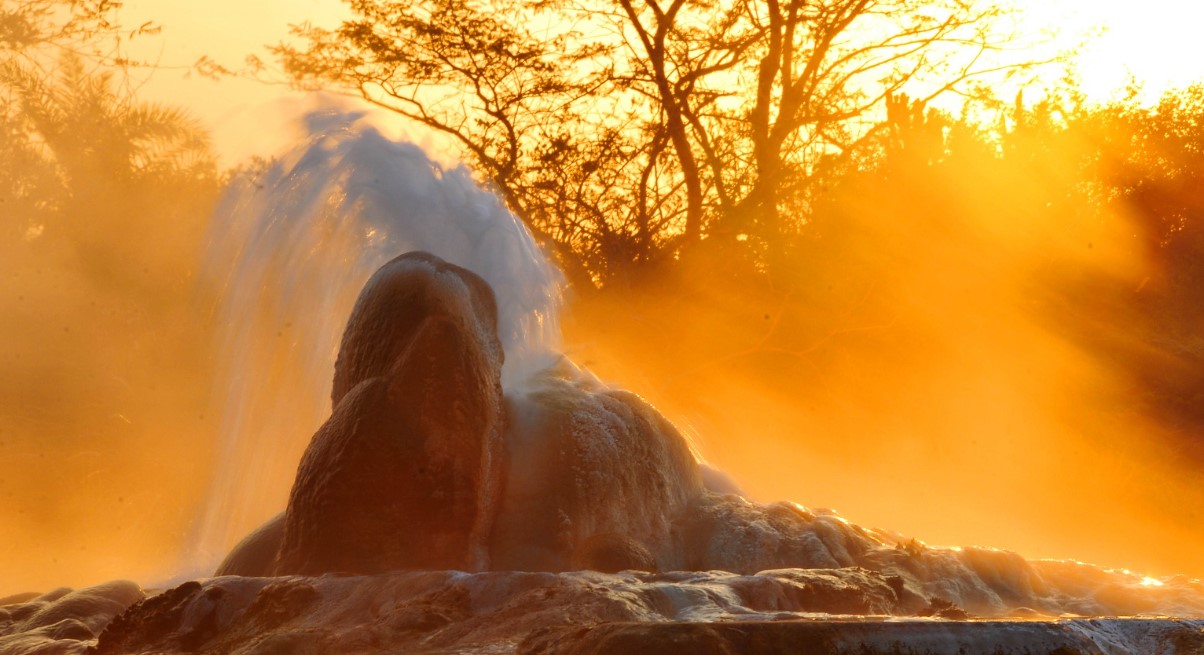
Due to the abundance of sunshine in the park, the walking trail leading to the hot springs is dry throughout the dry season. With the assistance of an armed ranger guide, visitors may easily navigate to the hot springs. Semuliki National Park has two hot springs; however, the female one is the most popular. Its waters may boil eggs because they are so hot. You will discover both the conventional and scientific explanations of the semuliki hot springs’ formation while you are there.