
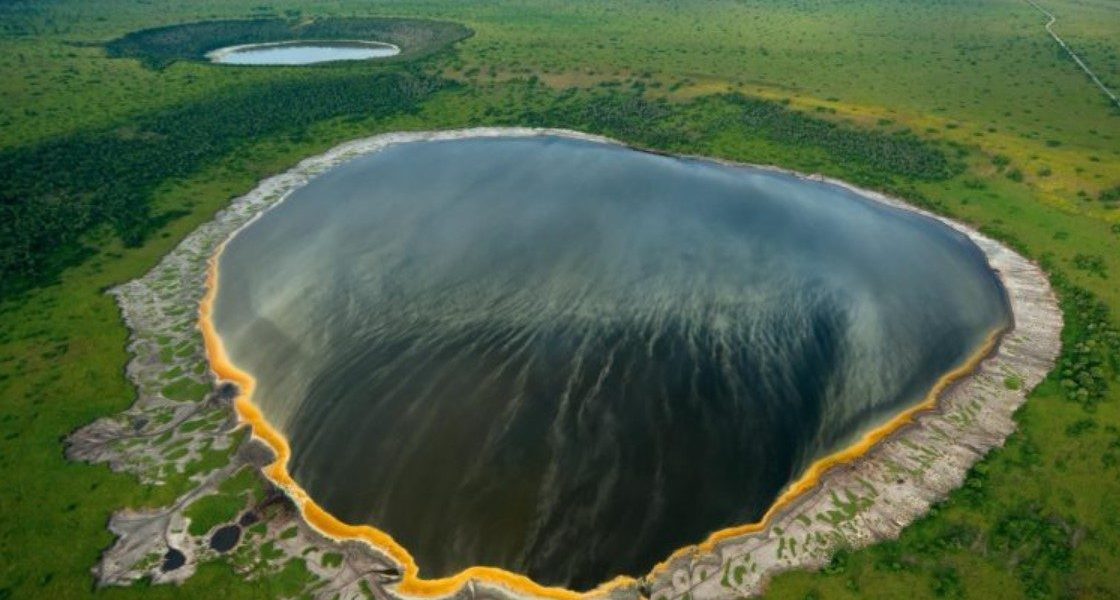
Crater lakes in Queen Elizabeth National Park: Queen Elizabeth National Park is 1978 square kilometers and is situated in western Uganda. The Ugandan government gazetted the park in 1952 to preserve its various animals and features. The region is well-known for having water sources, 600 bird species, 95 animals, 10 primate species, and tree-climbing lions.
There are 52 crater lakes located within Queen Elizabeth National Park. Two lakes, Katinda and Mirambi, Lake Kayema, Lake Rutoto, Lake Kamweru, Lake Katwe, Lake Kibwama, Lake Kyasanduka, Lake Nyamusingiri, Lake Kifuruka, Lake Nkugute, Lake Mafuro, Lake Nyanza, Lake Mugogo, Lake Rwijongo, Lake Nkuruba, and Lake Kabarogi are among the 52 crater lakes in this park.
Lake Kisanga, Lake Chema, Lake Nziranga, Lake Kyema, Lake Kamweru, Lake Kamunzuku, Lake Lyantonde, Lake Nyabikere, and Lake Nyinambuga are just a few of the crater lakes found in this park. During nature walks, visitors can discover the crater lakes in Queen Elizabeth National Park, which are their own attractions.
Beyond wildlife, birds, and the Kazinga Channel, Queen Elizabeth National Park offers much more. Numerous ancient volcanoes known as explosive carriers can be discovered throughout the national park. A trip to Queen Elizabeth National Park offers visitors an excellent chance to see many crater lakes.
During nature hikes in Queen Elizabeth National Park, visitors on safari will have the opportunity to investigate these extinct volcanic formations. The Katwe explosion craters in Queen Elizabeth National Park, the Bunyaruguru crater area on the Kichwamba escarpment, and the Ndali-Kasenda crater fields between Kibale and Queen Elizabeth National Park are the three primary crater fields.
The three main crater lakes in Queen Elizabeth National Park
Lake Katwe explosion craters
With a diameter of up to 3 km and a depth of 100 m, Lake Katwe is the largest crater lake in Queen Elizabeth National Park. This crater lake and others were created by powerful volcanic explosions a millennium ago. Regardless of their volcanic activity, scientists think that superheated gas and steam without lava flow created Lake Katwe.
Mweya Safari Lodge may be reached on foot from Katwe Crater Lake, which is located close to the Mweya Peninsula. The entrance and exit of Queen Elizabeth National Park, Kabatoro Gate, is 27 kilometers away from Katwe Crater Lake. During nature walks, visitors can observe salt mining, locals, and many bird species at Katwe Crater Lake. The Rwenzori highlands and the Kazinga Channel, which connects Lake Edward and Lake George, are visible to visitors to Lake Katwe.
Bunyaruguru crater lakes
When on a safari in Queen Elizabeth National Park, visitors should see the stunning Bunyaruguru Crater Lakes. Bunyaruguru Crater Lakes are situated in the Kichwamba Escarpment on the eastern edge of Queen Elizabeth Park, south of Lake George. They are thought to have originated as a result of volcanicity, which causes the volcano’s top to fly off and exit the crater.
For an amazing sense of nature, tourists can visit the Bunyaruguru crater lakes. Visitors can observe many bird species, small animals, greenery, and locals while doing nature hikes around the crater lakes. Nkuruba, Mafuro, Kamunzuku, Murambi, Kamweru, Katinda, Kyema, Nyungu, and Rwizongo are only a few of the crater lakes in Bunyaruguru.
Ndali-Kasenda crater field
Between Queen Elizabeth National Park and Kibale Forest National Park lies another well-known hidden natural volcanic region: Ndali-Kasenda Crater Field. A million years ago, volcanic activity created the Ndali-Kasenda crater lakes. The picturesque crater lakes in the Ndali-Kasenda crater field are the result of calderas left behind by volcanic activity.
Every crater lake in Queen Elizabeth National Park has clean water; however, the water in the Ndali-Kasenda crater lakes is green and smells like sulfur. The 20,000 Uganda shilling note features the lakes that comprise the Ndali-Kasenda crater field: Lake Nkuruba, Lake Lyantonde, Lake Nyabikere, Lake Kifuruka, and Lake Nyinambuga.
The formation of crater lakes in Queen Elizabeth National Park
The Queen Elizabeth National Park’s crater lakes are ancient volcanic formations that were created a very long time ago. According to scientists, these crater lakes were discovered approximately 10,000 years ago as a result of intense volcanic activity that caused the surface to blast off, leaving behind depressions. Because of radioactivity, the earth’s interior experienced extreme heat and pressure.
The crater lakes in this park are the result of rainwater filling in the depressions left behind. The majority of these crater lakes contain clean, safe water for swimming and drinking, but some have sulfuric water, which is green in color and has an overpowering odor due to the acidic waters.
Activities done in crater lakes in Queen Elizabeth National Park
The primary activities on crater lakes during a safari in Queen Elizabeth National Park are nature hikes. Following significant activities like boat cruises, wildlife drives, chimpanzee trekking, and birdwatching, among others, the nature walk activities are typically completed. Armed ranger guides take visitors to any of the crater fields in the afternoon.
Tourists can learn how these lakes developed, witness salt mining at Lake Katwe, and identify various bird species in the surrounding vegetation while taking nature hikes around these crater fields. To assist visitors in exploring the lakes, locals run boat tours.
On several of the lakes, there are bicycle tours that allow visitors to ride the paths surrounding the lakes, get a clear view of the lakes, encounter various species, and take in the refreshing breeze from the lake’s waters.