Discover the hidden gem of Uganda—Semuliki National Park, a lowland rainforest teeming with biodiversity, geothermal hot springs, and an untouched Congo Basin ecosystem. Learn how to get there, what wildlife to expect, and why Semuliki is a must-visit for birders, nature lovers, and eco-tourists
Why Semuliki Valley is Special
A Rare Tropical Forest in East Africa
Semuliki Valley (through Semuliki National Park) is home to the only true lowland tropical rainforest in East Africa. The forest is a direct extension of the Congo Basin’s Ituri forest, a relic of a vast ancient ecosystem stretching westward.
Biodiversity Hotspot
The forest supports over 336 tree species.
It also hosts more than 440 bird species, representing roughly 40% of Uganda’s birdlife, including many species found primarily in Central Africa or restricted to the Albertine Rift zone
Unique Blend of Ecosystems
Semuliki features a mosaic of habitats: dense rainforest, swamp forest along rivers, riparian woodlands, and savannah-woodland edges, giving visitors varied landscapes and wildlife encounters
What to see in Semuliki Valley
Mammals: The valley supports a wide variety of animals, including forest elephants, African buffaloes, waterbucks, warthogs, bushbucks, and even elusive creatures like leopards
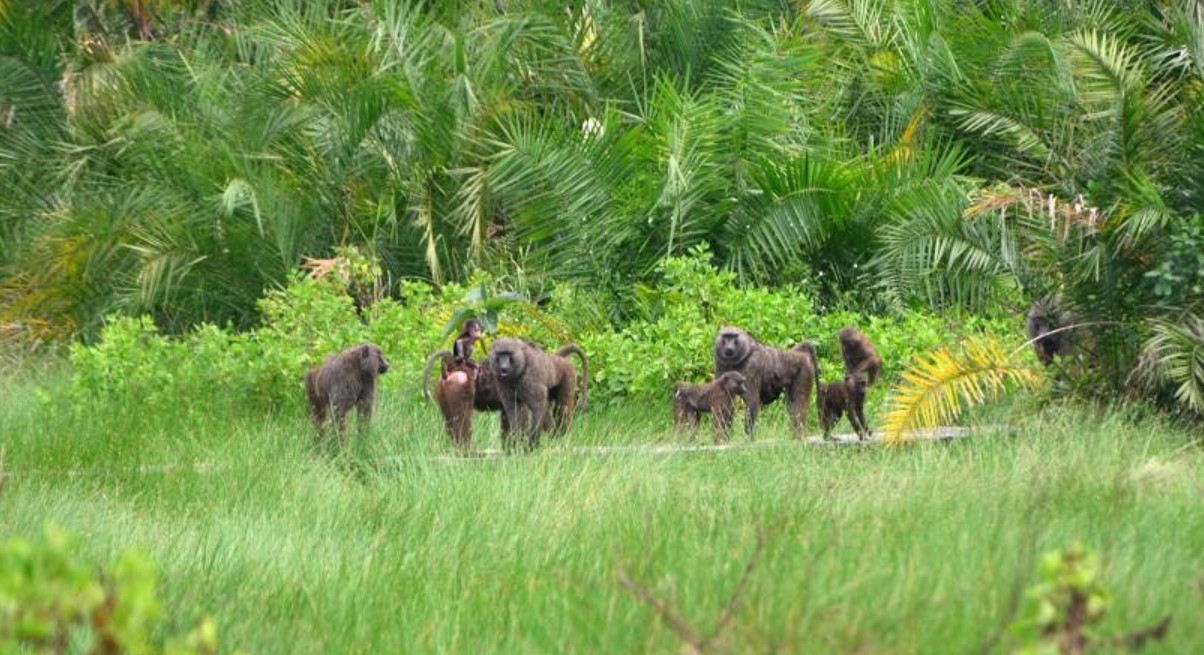
Primates are also abundant, making it one of Uganda’s most primate-rich regions
Birds & Butterflies: With over 440 bird species recorded, including forest specialties, riverine birds, and swamp-edge species, Semuliki is a birdwatcher’s dream. Butterfly diversity is also high with many swallowtail and Charaxes species
Geothermal Springs & Wetlands: The valley’s subterrain gives rise to natural hot springs, especially around Sempaya Hot Springs and wetland habitats along the Semuliki River, which provide water sources for animals and migratory stopovers for birds.
Mammals, Primates & Other Fauna
The park is home to ≈ 53 mammal species, including many Central African forest mammals rarely found elsewhere in East Africa.
Expect to find primates like chimpanzees, grey-cheeked mangabeys, De Brazza’s monkeys, red-tailed monkeys, black-and-white colobus, central African red colobus, blue monkeys; nocturnal primates such as bush-babies and pottos; and other mammals including forest elephants, forest buffaloes, duikers, hippos and crocodiles along the river
The mix of habitats forest, swamp, river, and woodland coupled with Semuliki’s long ecological history explains its unusually high species richness.
Sempaya Hot Springs: Nature’s Geothermal Wonder
One of Semuliki’s most iconic attractions is the Sempaya Hot Spring, a geothermal spring tucked deep in the forest, offering both natural spectacle and cultural mystique.
There are two main springs: the “male” spring called Bintente (a calmer pool) and the “female” spring Nyansimbi, a boiling geyser that can spout water and steam over two meters high.
Water from the hot springs can reach temperatures above 100°C, hot enough to boil eggs or plantains, something many visitors try as a unique experience.
Geologically, the hot springs reflect the ancient tectonic forces of the Rift Valley and offer visible signs of underground activity in a region shaped over millions of years.
For many visitors, the journey through rainforest to reach steaming pools surrounded by dense forest and rich birdlife makes the hot springs a highlight unlike anything else in Uganda.
Birdwatching & Rainforest Walks in Semuliki
Birdwatching & Forest Walks: Trails like the Kirumia Trail and the Red Monkey Trail give birders and nature lovers access to deep forest, riverside woodlands, and woodland-grassland fringes prime for spotting rare birds and primates
Visit the Semuliki Hot Springs: A guided walk from the park entrance leads to Sempaya Hot Springs experiencing boiling geysers deep in the forest is a must-do.
River & Wetland Watching: The Semuliki River meanders through the valley and supports aquatic wildlife like hippos, crocodiles, and waterbirds spots worth checking if you love swamp and river ecosystems
Cultural and Community Encounters: The region around Semuliki is home to ethnic groups such as Bwamba, Bakonjo, Batuku, and Batwa (forest-edge communities with long traditions). Visiting Semuliki offers an opportunity to learn about their ways of life and relationship with the forest.
Getting to Semuliki Valley National Park
To reach Semuliki from Uganda’s major towns: The journey typically goes via Fort Portal from there, a ~2-hour (≈ 52 km) drive to the park entrance at Sempaya, descending through the dramatic Rwenzori valley. Roads can be rough, especially in rainy periods, and a 4×4 vehicle is recommended
Public transport is available from Fort Portal or Bundibugyo (town close to the park), though return transport later in the day may be unreliable staying overnight near the park is advisable
Semuliki can be visited year-round, though the rainy seasons (when rainfall can exceed 1250 mm annually) bring higher humidity and occasional swampy/muddy paths but also lush forest conditions and active birdlife