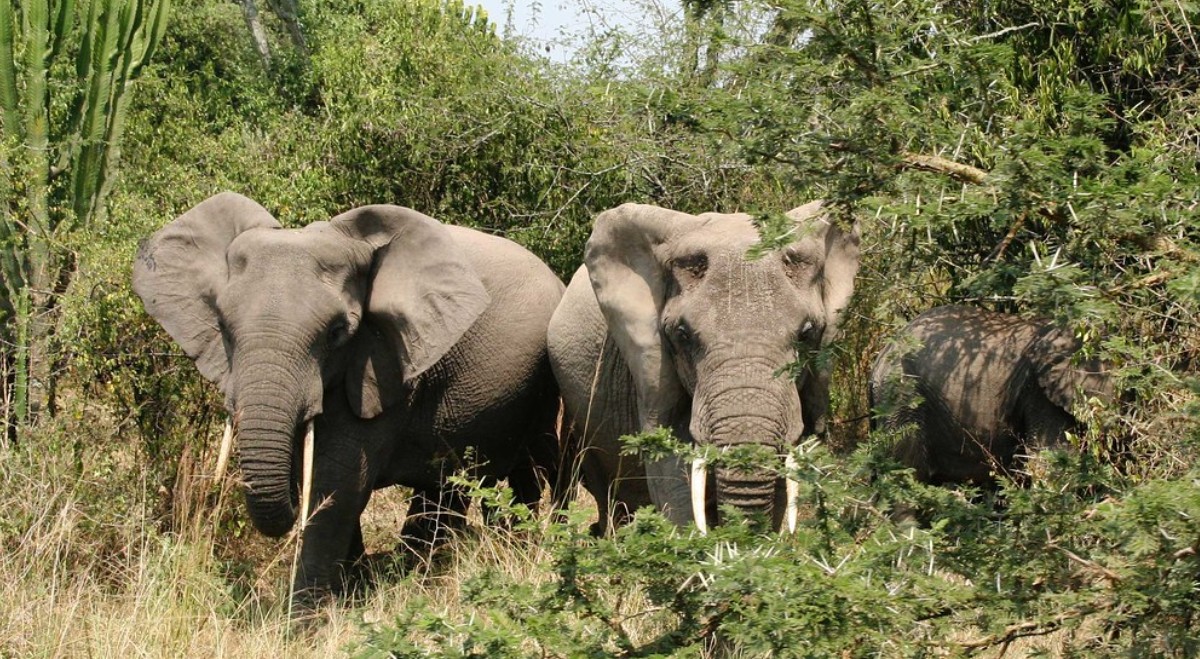
Filming elephants in Queen Elizabeth National Park: Queen Elizabeth National Park is now the ideal location for filming due to the increase in the number of African elephants there. A study conducted by the Uganda Wildlife Authority found that the number of elephants in Queen Elizabeth National Park rose from 2,913 in 2015 to 3,953 in 2018. We don’t have the population number as of 2022, but we think it has grown as a result of higher birth rates.
One of the few national parks in western Uganda with the best elephant filming options is Queen Elizabeth National Park. The Queen Elizabeth National Park, a savanna national park, allows visitors the chance to create excellent elephant documentaries and movies. The Mweya, Kasenyi, and Ishasha areas are where all the filming in Queen Elizabeth National Park takes place.
The dry season is the ideal time to photograph elephants in the regions of Kazinga Channel, Queen Elizabeth National Park. Because these regions have a lot of water for animals and nice plant cover from the other park areas, elephants tend to congregate here in search of water and green pasture.
In Queen Elizabeth National Park, what does it take to make elephant films?
A filming permit from the Uganda Wildlife Authority is required in order to film the African elephants in Queen Elizabeth National Park. The Uganda Wildlife Authority is a government agency responsible for overseeing and regulating all park operations, so they should provide you a ticket that permits you to photograph the African elephants. The media card is another essential item for filming elephants in Queen Elizabeth National Park. You can film the elephants with this permission from the Uganda Media Council.
The elephant filming expedition in Queen Elizabeth National Park
Because they are always roaming around Queen Elizabeth National Park, you may see elephants there at any hour of the day. The ideal time to film elephants is in the morning, when they have just woken up and are searching for food. Compared to the afternoon hours when they are taking a break after eating, you will see as many elephants as they can.
The ideal safari cars to employ during the elephant filming session are Land Cruisers and Super Custom 4-wheel drives since they provide the clearest vantage point. The elephant filming begins with a game drive through various areas of the park, where tourists search for the whereabouts of these biggest, territorial creatures. Although elephants can be seen everywhere in the park, those who wish to capture film will search for the locations where the biggest herds might be.
Tourists take out their cameras and begin filming the elephants for a while when they are discovered. Elephant filming is fascinating because the filming team gets to learn new facts about the elephants as they film. Tourists will see them engaging in daily routines such as foraging for food, eating, playing, mating, and sleeping, among others.
With 95 different species of mammals, including the big 4, Queen Elizabeth National Park is home to a diverse range of wildlife. The protected region also supports 612 bird species and 10 primate species, such as the Kyambura chimpanzees. There are many things to film inside the park besides elephants because of all these wildlife species. Tourists can capture videos of the lions, leopards, banded mongooses, hippos, and birds, such as the uncommon shoebill stork, to name a few examples.
When is the best time to film elephants?
Although tourists can film elephants in Queen Elizabeth National Park all year round, there are certain months that are superior to others. The ideal months for filming elephants are during the dry seasons, which run from June to September and December to February. During these periods, the park has little to no rain to damage the filming equipment, the vegetation is short and sparse with good views of the elephants, and the dry game trails make it simple to enter the park’s territory.
From March to May and from October to November, tourists may still capture elephants on camera during the rainy season. But because the resorts are offered at a discount, this appeals to travelers on a budget. The rainy season is a good time to film elephants in Queen Elizabeth National Park since the scenery is so lush. The rainy season is not a good time because of the heavy rain, dense flora cover, and muddy game trails.
While filming elephants, where should you stay?
Tourists on elephant filming safaris can spend one or more nights at Queen Elizabeth National Park, which offers a wide selection of lodging alternatives, ranging from low-cost to mid-range to opulent. Among the hotels in Queen Elizabeth National Park are Ishasha Wilderness Camp, Mweya Safari Lodge, Kyambura Gorge, Katara Lodge, Kikoringo Safari Lodge, Engiri Game Lodge, Enjovu Lodge, Enjojo Lodge, Park View Safari Lodge, and Buffalo Lodge.
Is Queen Elizabeth National Park accessible for elephant filming?
Road and air transport are available at any time of the year for elephant filming in Queen Elizabeth National Park. There are two ways that tourists may use road transport to get to Queen Elizabeth National Park and film elephants. The southern portion of the park can be reached by a road that passes through Masaka, Mbarara, Bushenyi, Rubirizi, and Kampala/Entebbe. From Kampala, the second path goes to the park via Mubende, Fort Portal, and Kasese.
Tourists visiting Queen Elizabeth National Park for filming safaris can utilize chartered flights provided by Aerolink Uganda and Bar Aviation Uganda via air transport. From Kajjansi Airstrip and Entebbe International Airport to Mweya Airstrip inside the park or Kasese Airstrip, these airline businesses provide daily flights to Queen Elizabeth National Park.