
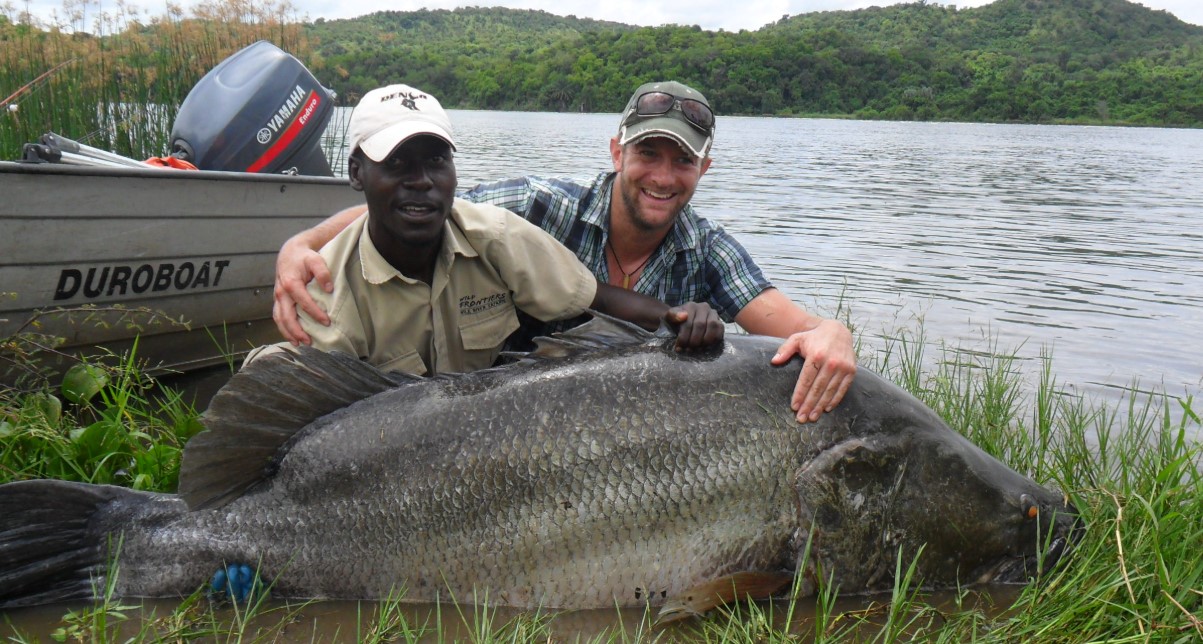
Fishing on River Nile: Uganda is one of Africa’s most beautiful countries. In addition to its breathtaking landscape, Uganda is home to the kindest people, mountain gorillas, and breathtaking water features. Due to its location on the raised basin that rises between the Eastern and Western branches of the Great Rift Valley, Uganda offers a lot of potential for the development of water-based transit.
The majority of Uganda is fertile and well-watered, with the exception of the extreme northeastern semi-desert. Water covers over a quarter of the country’s surface. Lake Victoria, Africa’s biggest lake and the world’s second largest freshwater body, is shared by Kenya, Tanzania, and Uganda.
The water-based tourist activities and attractions were made possible by the presence of Lakes Albert, Edward, and George, which are located close to the Congo border.
In this piece, however, we examine the River Nile fishing safaris, which are usually conducted at Murchison Falls National Park and want professional support to guarantee both client safety in this daring location and the greatest chance for fruitful River Nile fishing excursions. Some of you might be skilled enough to tackle the Nile with only a boat and captain, but for the majority, it is advised to have an expert fishing guide to make sure your fishing trip goes well.
How to go to Murchison Falls National Park’s Nile River for a fishing safari: It takes around six hours to go through Kampala from Entebbe to Murchison Fall National Park (depending on traffic), as most of the roads leading up to the park are tarmac. Murram roads may be found all across the national park.
A driver is provided for private transportation during our all-inclusive vacation in spacious, luxurious, four-wheel-drive land cruisers with room for fishing equipment. You may also take internal flights, which are usually planned in advance, to go from Entebbe to the Murchison Falls National Park if you’re short on time.
Traditional fishing season: Although the best time of year to fish at Murchison Falls National Park varies from year to year, it is generally agreed that the drier months of the year are the best times to fish. For example, December through March and June through October are the months when we catch all year round, but there is less rainfall during these months.
Conditions and fishing area: The region at the base of the falls is where most sports fishing is done at Murchison Falls National Park. You may fish from the rocks on the riverbank or from a boat a little farther downstream in the pools. To ensure that your fishing trip is successful, Great Adventures Fishing Safaris use boats to reach all fishing locations.
Because it may get quite hot at Murchison Falls (often above 40 degrees Celsius), especially during the daytime hours, anglers should use sun protection gear such as helmets, long sleeve shirts, and suntan lotion. Additionally, we recommend wearing long pants and insect repellent body spray because tsetse flies are abundant during specific periods.
Which fishing techniques are employed?
Several fish species, including Nile perch and catfish, have been captured with the use of live bait casting lures and other fishing techniques. Furthermore, a variety of smaller species, such as tiger fish, can be captured by spinning and utilized as live bait.
We recommend using a fixed spool or multiplier reel and a rod that is between 11 and 8 feet (2.5 meters) length. For smaller species, a 7-foot spinning rod and 5-kg (10-lb) line will do.For Nile perch and catfish, any fixed-spool or multiplier reel with 30-35 lb line (17 kg) will work. It is dependent on your skill and personal taste.
Tiger fish and other tiny species may be caught on any reel that you can easily cast small spinners on. We utilize the same fishing gear on all of our trips because we believe that any used gear that is lost, stolen, or not returned to us at the conclusion of the fishing season has to be paid at our standard rate.
Getting ready for fishing safaris
The national park has no shops, so you’ll need to pack everything you’ll need, such as sunscreen, medicine, smokes, additional batteries for cameras and electronics, and bug repellent. We recommend bringing as much sun protection as you can, such as hats, sunglasses, and creams, because it may become rather hot.
For shore fishing from the rugged, steep rocks, hiking or safari boots are the ideal footwear. Light-colored, lightweight clothing is ideal for fishing since it keeps you cooler and deters tsetse flies.
Long sleeves and long pants are ideal, but wherever possible, stay away from wearing dark blue or black clothing since these colors actually attract tsetse flies. For your conformance, you also need a sweatshirt for the evenings and a lightweight raincoat.