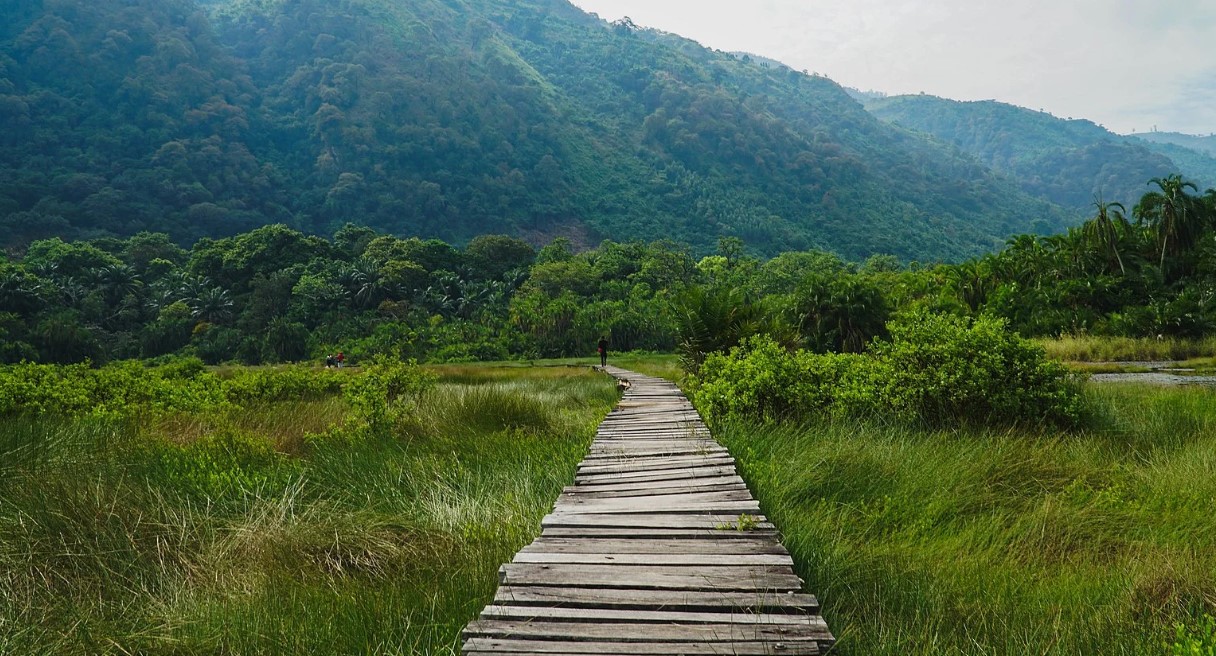
Planning for safaris in Semuliki National Park? One of the most common questions travelers ask is, “How many days do I really need to experience this hidden Ugandan gem?” Semuliki is much more than just a wildlife park. It’s a place of lush lowland rainforest, forest trails, hot springs, birding, and deep cultural encounters. While some visitors make a quick day trip, spending 2–3 days gives you the time to unlock its true magic, from sunrise bird walks along forest trails to soaking in the famous Sempaya hot springs, plus a chance to connect with the local Batwa community. Whether you’re building this into a longer Uganda circuit or focusing solely on Semuliki, figuring out how many days to allocate is key to maximizing your experience.
One of Uganda’s national parks is Semuliki National Park, which is situated in the country’s western region. The national park is situated south of Lake Albert in the Bundibugyo area, which borders both Uganda and the Democratic Republic of the Congo. At 220 square kilometers, Semuliki National Park is one of the smallest national parks, having been gazetted in 1993.
Over 435 bird species, 448 butterfly species, 9 primates, and 53 animals are protected in the 220 square kilometer Semuliki National Park. These can be viewed when participating in various park activities and reside in the park’s many vegetation zones. The female and male hot springs are located within Semuliki National Park.
The number of days required for a safari in Semuliki National Park varies based on the client’s choices, time, money, and desired activities. Depending on what you want to accomplish there, you can spend three, four, or even more days at Semuliki National Park. The following information can assist visitors in deciding how many days they wish to spend in Semuliki National Park.
What determines the number of days tourists stay in Semuliki National Park?
Number of activities to do
Semuliki National Park offers a wide range of activities and attractions. Birds, monkeys, butterflies, mammals, greenery, hot springs, and the Batwa pygmies that inhabit the park’s perimeter are some of the attractions. Bird watching, nature walks, butterfly viewing, cultural excursions, chimpanzee trekking, and batwa visits are just a few of the events held in Semuliki National Park.
A safari in Semuliki National Park requires three or more days to fully engage in all park activities, given the aforementioned attractions and activities. A person may only use one or two days if they are passing through or stopping by the park for one or two activities. Semuliki National Park’s activities take place in the morning and evening, hence there can only be two activities per day. The number of days increases with the number of activities.
Physical ability
The length of a traveler’s stay on a safari is also determined by their physical capabilities; very elderly travelers need to spend a few days in the park and engage in major activities, whereas younger, more active travelers need more days; the younger travelers engage in a variety of park activities, while the older travelers only engage in a few.
The location of the park
The majority of safaris begin in Kampala/Entebbe, which is approximately five to six hours away by car from Semuliki National Park in the Bundibugyo district in western Uganda. The first and last days of a safari to Semuliki National Park are dedicated to travel; therefore, visitors won’t engage in any activities during that time.
Since the first day of your trip is dedicated to travel, the park’s activities always begin on the second day. Since you always check out of the lodge on the final day and head back to Kampala or Entebbe for your flights home, the second-to-last day of the safari is the last day for park activities. Travelers should always deduct the two days of travel when calculating how many days they will spend within Semuliki National Park.
Travel budget
The tourist’s travel budget determines how much a safari in Semuliki National Park will cost. Tourists should know that the more the budget, the more activities a person can participate in, and the more the activities, the larger the number of days. While luxury or mid-range visitors have the opportunity to remain in the park for as many days as possible, budget travelers prefer to spend a few days there because that is what their budget can support.
How many days are needed for a safari in Semuliki National Park?
Tourists can engage in a variety of park-organized activities during a four-day safari in Semuliki National Park. Two days are dedicated to travel, while the remaining two days may be spent engaging in various park activities. The first day of a tourist’s trip to Semuliki National Park is spent settling into the lodge and unwinding after the lengthy journey.
Visitors may engage in up to two activities on the second and third days in Semuliki National Park. Bird viewing, butterfly watching, tracking primates, natural walks, Batwa culture excursions, and hot spring visits are some of the possible activities. There is never any action on the final day since it is often used for returning to Kampala or Entebbe.
When to visit Semuliki
Although Semuliki National Park is open to visitors throughout the year, some months are better than others. The greatest times to go on a safari in Semuliki National Park are during the dry season, which runs from June to September and December to February. This is due to the fact that they have little to no rainfall, which makes the walking pathways dry and simpler to navigate. They also have short vegetation and wonderful views of the park’s attractions.
During the rainy season, which runs from March to May and October to November, visitors can still visit Semuliki National Park. The park is constantly available for tourism, but visitors should be aware that it receives a lot of rainfall, which makes the walking pathways muddy and slick and obscures views of the attractions due to the dense, tall vegetation.