
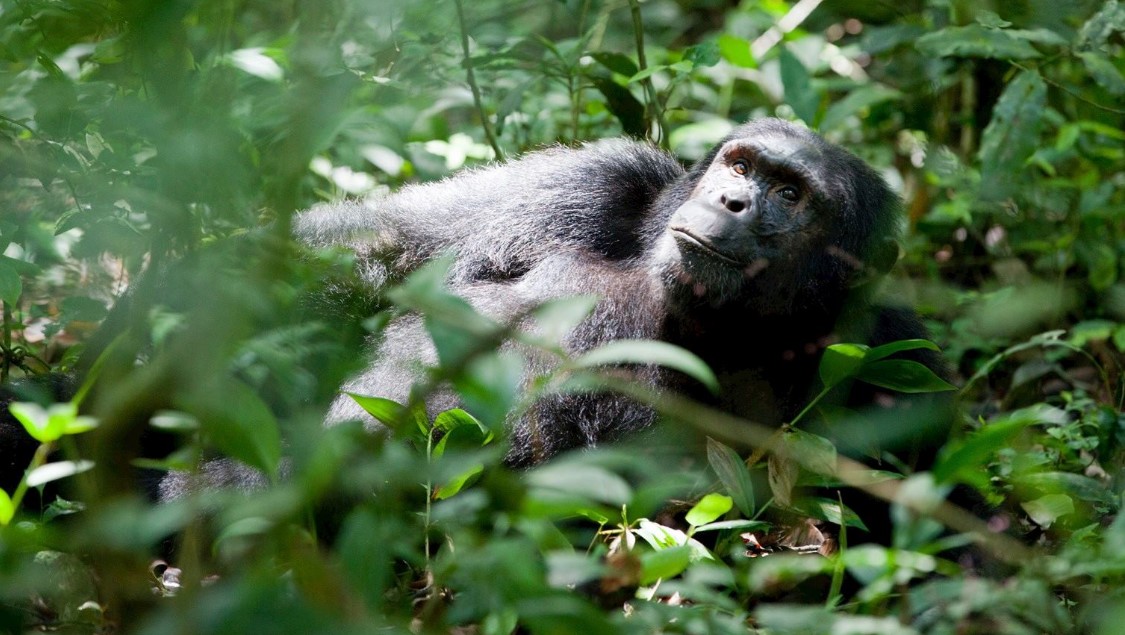
Is it worthwhile to visit Kibale Forest National Park? Given that almost half of the world’s chimpanzees live in Kibale Forest National Park, it is well worth a visit. One of the national parks in Uganda that visitors should not miss is Kibale Forest National Park, particularly if they wish to see chimpanzees in their natural habitat. The tropical rain forest of Kibale Forest National Park is home to about 1500 chimpanzees, which are visible on trekking excursions.
The 776 square kilometer Kibale Forest National Park is home to chimpanzees as well as 12 primates, 60 animals, and 370 bird species. In Kibale Forest National Park, a safari is worthwhile as it allows visitors to observe the park’s many species and other attractions. The park is worth visiting because of the variety of tourism activities offered there, which include the ones listed below.
Why you should go to Kibale Forest National Park
Chimpanzee trekking is possible in Kibale Forest.
The world’s largest chimpanzee population is found at Kibale Forest National Park. Chimpanzee trekking in Kibale Forest National Park is a once-in-a-lifetime event and a dream come true for many people worldwide, thus any visitors who ever undertake it should consider themselves fortunate.
Because visitors spend time with chimps in their natural environments, Kibale Forest National Park is a worthwhile destination. With 98.8% human DNA, chimpanzees are considered to be near cousins of humans. Kibale Forest National Park is home to more than 1500 chimpanzees, some of whom have become accustomed to the presence of humans.
The activity that allows you to get up close and personal with chimpanzees in the Kibale Forest National Park is chimpanzee trekking. Following a briefing, the trekkers are led into the bush by armed ranger guides. They begin using several walking paths to look for potential chimpanzee locations.
Tourists have the chance to witness a variety of park attractions while trekking to include, animals, primates, mammals, and plants. After 3-5 or even more hours, visitors are able to meet the chimpanzees and spend an hour with them, during which they may observe their activities, take pictures, and learn about their routines.
Birding Kibale
With more than 375 bird species, Kibale Forest National Park is among West Uganda’s top birding locations. Visitors can engage in bird watching while on a safari at Kibale Forest National Park to observe the many species that have been identified there. Using several bird-viewing pathways, an armed ranger guide leads you through the park for the guided activity of bird watching.
You can see species like the blue-headed bee-eater, cassin’s spinetail, masked apalis, nahan’s francolin, yellow-rumped tinkerbird, African pitta, black-tailed oriole, African pied wagtail, great blue turaco, green-breasted pitta, Abyssinian ground thrush, blue-headed sunbird, brown-chested alethe, blue-headed bee-eater, and black-capped apalis when you go bird watching in Kibale forest national park.
Expect to see more species while bird watching in Kibale Forest, including the masked apalis, scaly-breasted illadopsis, Cameroon sombre greenbul, chubb’s cisticola, African emerald cuckoo, piapiac, black-crowned tchagra, African grey woodpecker, Narina trogon, African pipit, African firefinch, brown-backed scrub-robin, piping hornbill, chestnut wattle eye, bare-faced go-away-bird, swallow-tailed bee-eater, and chocolate-backed kingfisher, to name a few.
You may take walks in the outdoors.
Tourists can come up close and personal with nature through the nature walk activities offered by Kibale Forest National Park. Tourists may visit the majority of the park sections and discover the hidden gems by using several nature walk routes. Visitors can observe many tree species, birds, animals, and primates on a nature walk at Kibale Forest National Park. More than 13 primates may be found in Kibale Forest, including, to name a few, olive baboons, vervet monkeys, blue monkeys, patas monkeys, red-tailed monkeys, Uganda red colobus, black and white colobus, and l’hoest monkeys.
Tour of the Bigodi community
During a safari at Kibale Forest National Park, you should not miss the Bigodi village visit. A local guide leads the Bigodi community tour, showing you throughout the hamlet and stopping at several residences. You may stop by the local medicine man, the coffee-making house, or the wine-making facility here.
You may observe the process of turning coffee from seeds to powder by going to the coffee-making house. Finally, a visit to the traditional man will let you to learn about the various uses of plants, and a visit to the wine-making home will allow you to observe how wine is created from bananas and finally, a visit to the traditional man will let you to learn about the many ways that herbs may help with certain illnesses.
Accessing National Park of Kibale Forest
Using either air or vehicle transportation, visitors may reach Kibale Forest National Park in a single day. Although flying is the quickest way to reach Kibale Forest National Park, mainly affluent tourists use it. Entebbe International Airport offers flights to Kasese Airstrip, the airport nearest to Kibale Forest National Park. From there, visitors go to the park via road for a few hours.
Travelers that take the route begin their journey from Entebbe or Kampala and go to the park via Mityana, Mubende, Kyegegwa, Kyenjonjo, and Fort Portal. With stops along the route, the trip to Kibale Forest National Park takes five to six hours, and visitors may enjoy breathtaking views of various landmarks.
Kibale Forest National Park’s ideal time of year to visit
Though certain months are better than others, visitors can visit Kibale Forest National Park at any time of year. The best time to visit Kibale Forest National Park is during the dry season, which runs from June to September and December to February. This is because these months have little to no rainfall and lots of sunshine, which makes the walking trails manageable and the vegetation short and provides good views of the wildlife.
Kibale Forest National Park is accessible to low-budget visitors from March to May and October to November, when it rains. Since fewer visitors are visiting during this time, the lodges lower their rates, therefore they do receive cheaper tour packages. However, excessive rainfall during the rainy season causes the walking pathways to become muddy and slick, and the heavy foliage obscures views of the wildlife.