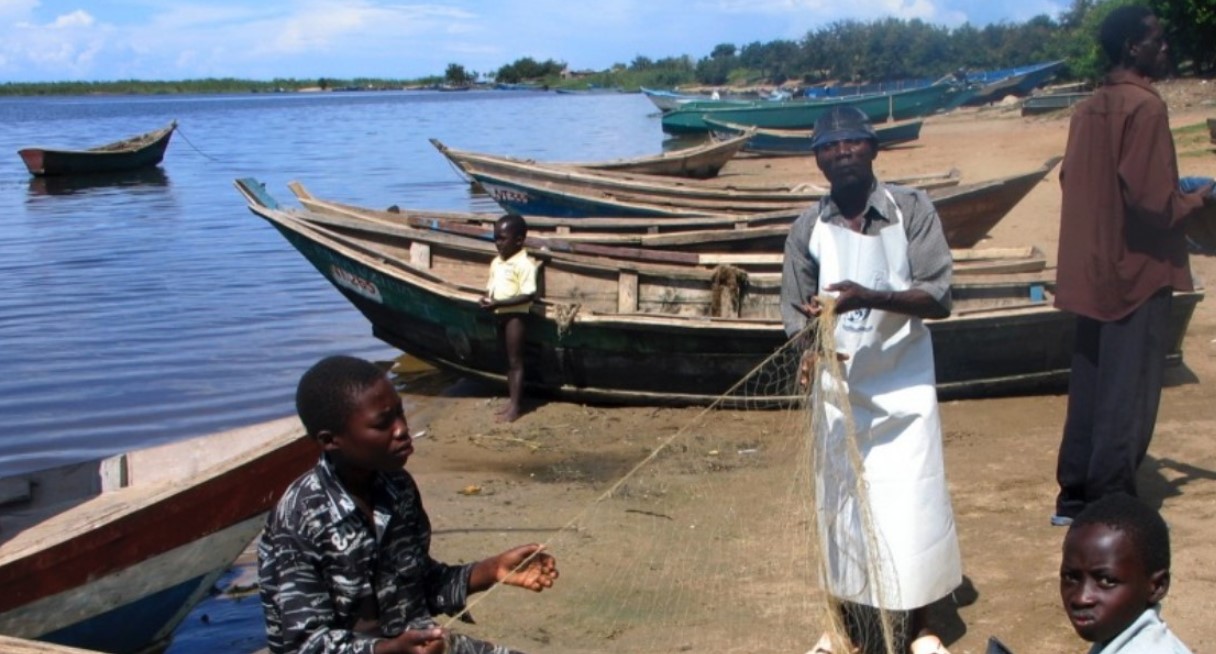
Ntoroko fishing village in Semuliki: Ntoroko fishing village is found in western Uganda in Bundibugyo district. The fishing village is located close to Semuliki National Park at the foot of Lake Albert. The fishing town is occupied by the residents that live in the neighboring areas and carry out fishing on these waters. Because of the various activities that take place in the lake, Ntoroko Fishing Village is one of the attractions near Semuliki National Park.
Fishing is the popular activity carried out in Ntoroko village, thus the name fishing village and it’s done by the local people. The local people do carry our fishing for money and also receive food for their family. On a visit to Ntoroko fishing hamlet, tourists are able to witness tourists conducting fishing, and they may buy different fish species obtained in the lake such tilapia, silverfish, and sprat.
Another popular activity at Ntoroko Fishing Village is bird watching. Since the area is one of the few locations in Semuliki National Park where the shoebill stork can be seen, tourists go bird watching there. Other bird species that can be observed around Ntoroko include the African Jacana, Nubian woodpecker, blue-breasted bee-eater, grey-headed kingfisher, wide-billed roller, marabou stork, common ringed plover, and helmeted guineafowl, among others.
What else is there to do in Semuliki national park before and after visiting Ntoroko fishing village
Chimp trekking
A few chimpanzees do reside in Semuliki National Park, where chimpanzee trekking is possible. Semuliki national park has a few chimpanzees in the tropical rainforest, some of whom have been habituated for trekking activities. Chimpanzee trekking is done by people who love to visit the chimps in their natural habitat and watch them carry out day-to-day activities.
Tourists in Semuliki National Park require 3 to 5 hours or even longer to locate chimps. The rangers initially brief the trekkers and afterward they lead them in the woods where they start seeking for the habituated chimps. During the hunt, trekkers are able to witness diverse woodland animals, birds, and greenery. Tourists are allowed to spend an hour with the chimps and observe them going about their everyday lives as soon as they are spotted.
Birding
Over 435 bird species have been reported in Semuliki National Park, and they can be spotted when one takes part in bird-watching activities. Bird watching is a supervised activity where you follow armed ranger guides around the park while keeping an eye out for various park activities. During a birding activity at the park, proficient birdwatchers will be able to see almost half of the bird species.
Shoebill stork, Northern bearded scrub robin, Yellow-throated nicator, White-thighed hornbill, Fire-crested alethe, Black-chinned quailfinch, African pygmy goose, piping hornbill, Orange Cheeked waxbill, Great White Pelican, Congo serpent eagle, Great Blue Turaco, White-crested hornbill, Spot-breasted Ibis, Grant’s bluebill, Nkulengu rail, African piculet, The white-bellied kingfisher, dwarf honeyguide, chestnut-breasted Negrofinch, and Eastern-bearded Greenbuls are just a few of the birds you see when you go.
While some other species of bird that can be seen in Semuliki National Park are the red-rumped tinkerbird, northern bearded scrub robin, Grauer’s cuckoo-shrike, Lemon-bellied Crombec, Yellow-throated Nicator, Blue-billed malimbe, Ross’s Turaco, Blue-billed malimbe, Long-tailed Hawk, White-crested hornbill, White-tailed Hornbill, Red-billed Dwarf hornbill, Spotted honeyguide, Orange-cheeked Waxbill, Yellow-throated nicator, Grant’s bluebill, Black-throated coucal, fiery- breasted bush-shrike, and Piping Hornbill among others.
Community tours
You can take a community tour of the nearby communities while you’re in Ntoroko Fishing Village. The Bakonjo, Bwamba, and Batwa pygmies live in the villages of Ntandi and Boma in Semuliki National Park, so visitors are free to do as they like. Due to their history of living with animals in the park, the Batwa pygmies are the most popular.
After being expelled from the park, the Batwa dwell in a number of settlements, where visitors can interact with these diminutive individuals. A visit to communities like Ntandi or Boma will offer you an opportunity to meet the Batwa in their houses. Here a local guide brings you to any of the communities where you meet the local people. They amuse you, lead you around the homes, and tell stories of long ago and how they live their day to day lives.
Nature walks
Nature hikes in Semuliki National Park are the best method for travelers to get close to nature and observe the numerous attractions in the area. The park has various nature walk pathways that allow visitors to explore different parts of the park. Some of the nature walks in Semuliki National Park include red-tailed monkey routes, Mugiri river forest trails, Sempaya Trail, Nyabsurogo Gorge climb, and Kirumia Trail, among others.
Each of the pathways used gives people an opportunity to see the hidden wonders of the park. Nature walk pathways to utilize rely on what the visitors wish to view, and it’s the armed ranger guides that lead you while walking throughout the park. During the nature walks, travelers are able to witness mammals, monkeys, birds, butterflies, hot springs, flora, and much more that is in the park.
Butterfly watching
With more than 448 butterflies overall, Semuliki National Park has the most butterflies in all of Uganda. Visitors to Ntoroko Fishing Village who want to see butterflies can plan an activity in the park and have the opportunity to witness over half of the species that have been identified. The activity is carried out in different sections of the park to enable people to see as many as they can. During the activity, travelers are also able to witness other fauna that the park has.
Euriphene saphirina, charaxes fulvescens, common ginger white, euphaedra hybrida, variegated pearl, charaxes pollux, bicyclus, andriasa contraria, veined swordtail, peneleos Acraea, square-winged red charaxes, simple orange forester, gregori’s brown pansy, toothed stately bush brown, common glider, cymothoe Cyclades, Bethune baker’s bush brown, mung bean moth, bicyclus mollitia, angular glider, rhodope dotted border, and painted pearl are just a few of the butterfly species that visitors can see.
Getting to Ntoroko fishing village
Located in Semuliki National Park, Ntoroko fishing village can be accessed in a single day utilizing road transport and air transport. The quickest route for visitors to visit Ntoroko hamlet and Semuliki National Park is by air, however it can be somewhat expensive. Since Kasese is the closest airport, those who wish to take a fly safari to Semuliki National Park can only go there. There are flights from Aerolink Uganda and Bar Aviation Uganda to the Kasese airstrip, from where you may take a driving drive to the park.
If visitors begin in Kampala or Entebbe, it takes them five to six hours to go by road to Semuliki National Park and Ntoroko area. The park is accessible by car from Kampala/Entebbe via Mityana, Mubende, Kyegegwa, Kyenjojo, Fort Portal, and Bundibudyo. When visiting Semuliki National Park via road, visitors have the chance to see a variety of sights.