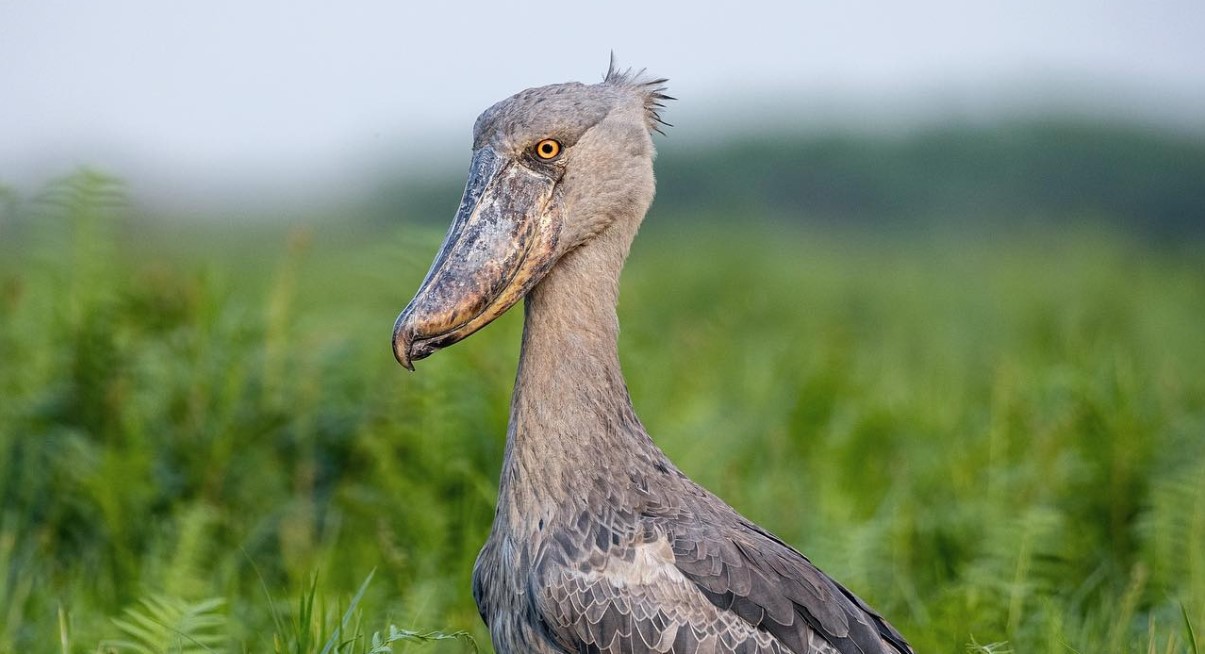
Shoebill Safari in Semuliki National Park, Ultimate Wetland Birding Adventure: Few experiences rival the magic of gliding silently by boat through wetlands at dawn, waiting and hoping for the legendary Shoebill Stork to emerge from the swampy waters. For birding enthusiasts and nature lovers, Semuliki National Park in western Uganda offers one of the most atmospheric, rewarding settings to meet this elusive giant. With over 400 recorded bird species, many of them rare forest and wetland dwellers
Shoebill Safari in Semuliki National Park
Semuliki offers more than just a bird sighting: it offers an immersive journey into one of Uganda’s richest biodiversity zones. A “Shoebill Safari” here isn’t just about ticking off a bucket-list species; it’s about experiencing timeless wetlands, dense forest, cultural heritage, and tranquility far from the usual safari crowds.
Why Semuliki? A Birding Paradise Unlike Any Other
Semuliki National Park, lying at the edge of the Congo Basin forest and stretching toward Lake Albert is a unique junction of swamp, riverine forest, and rainforest. This diversity of habitats supports over 435–441 bird species, many of which are rare forest specialists not found elsewhere in East Africa
Among these is the enigmatic Shoebill Stork. Though shy and elusive, this prehistoric-looking bird finds refuge in Semuliki’s wetlands and swampy margins of Lake Albert.
Along with more than 300 kinds of butterflies, there are eight species of primates, including the red-tailed monkey, Vervet monkey, blue and De Brazza’s monkey, grey-cheeked mangabey, olive baboon, black and white colobus, and chimpanzee.
Of the 400 bird species found in Semuliki National Park, 216 are truly forest birds, such as the lyre-tailed honeyguide, woodland ground thrush, and Sassi’s olive greenbul.
What to Expect: The Shoebill Safari Experience
Boat Cruise on Lake Albert / Semuliki River Delta
The best chance of spotting Shoebills in Semuliki is from a boat or canoe cruising the wetlands and marshes that flow into Lake Albert. The still waters and papyrus-lined channels create a perfect environment for these birds to hunt fish and frogs
Sempaya Hot Springs
Sempaya hot springs are the most famous feature of Semuliki National Park. You may see the Rift Valley and Congo forest by driving to Sempaya Hot Springs. Since the forest is outside the park, you can stop there to observe birds and monkeys without paying park fees. While at the fig and palm forest area halfway between Sempaya and Ntandi, it’s worthwhile to scan a variety of forest hornbills.
Culture & Nature
Semuliki’s appeal isn’t limited to wildlife. You can combine your birding with visits to cool thermal springs (like those at Sempaya), forest walks to see primates and butterflies, and even cultural interaction with local communities such as the Batwa people who share traditional stories, dances and crafts
Experience the lifestyle of the Batwa and Bamba people, who formerly inhabited the forest. The pygmies even have kings and queens in their civilizations. Because of their hunter-gatherer lifestyle, the Batwa were reliant on the Semuliki forest for tools, food, shelter, and medicine.
Due to tourism, these pygmies were forced to leave the forest. The park provides the Batwa with an alternative source of income by letting them showcase their cultural history to visitors, tell them about music and dance performances at Ntandi, and allow them to make lovely handicrafts to sell.
Guided Nature Walks
The cluster of hot springs at Sempaya can be reached by a short guided walk trail from the Sempaya Information Center. The striking location features a low salt sculpture opening with its biggest geyser spouts, which can reach a height of two meters. Red-tailed monkeys, grey-cheeked mangabey, and black and white colobus—all of which are highly prevalent at this point—as well as intriguing bird species like the forest hornbills, blue-breasted kingfisher, red-rumped and yellow-throated tinkerbird, Frasier’s ant-thrush, and honey guide greenbul can be seen along the trail leading to the hot springs
Another hot spring is not so much a geyser as it is a wide steaming lake. Compared to the walk to the springs, it also provides exposure to a range of localized birds. A variety of monkeys, crocodiles, buffalo, and elephants can be seen on the river in addition to the red monkey trail.