
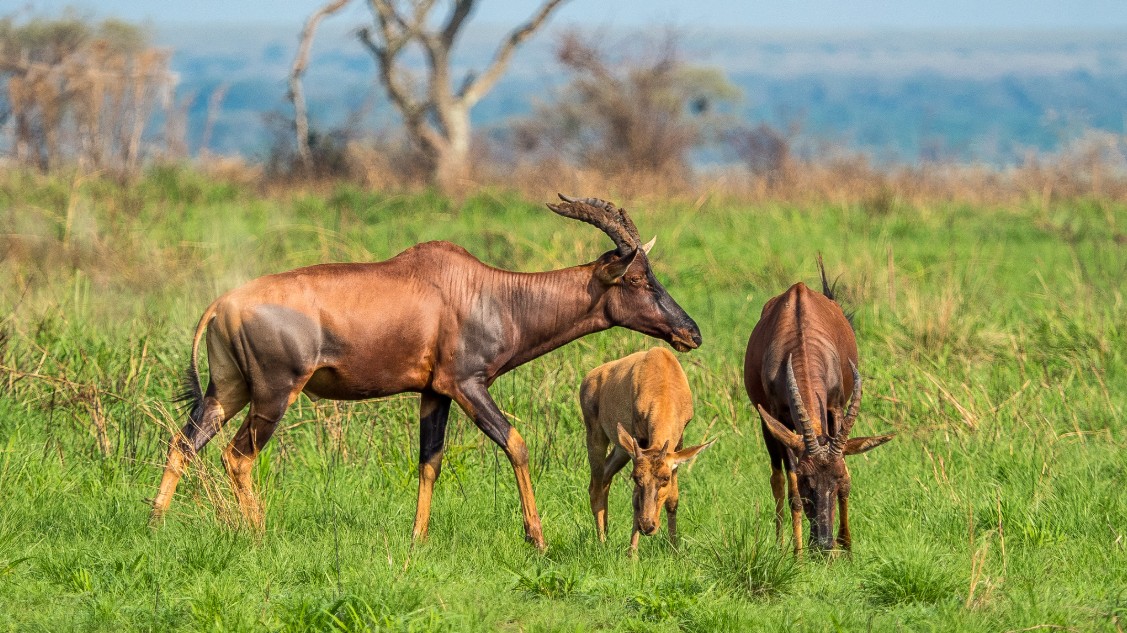
Visiting Queen Elizabeth National Park in the rainy season: Queen Elizabeth National Park is in western Uganda, around 400 kilometers southwest of the capital city of Kampala. The national park has a diverse array of attractions, including the Kazinga Channel, 10 primate species, 95 mammals, and over 600 bird species. Many tourists come to the national park from all over the world for wildlife safaris.
Due to its always open gates, you may explore the various park activities in Queen Elizabeth National Park at any time of year. The park has two rainy seasons and two dry seasons, each of which attracts a different kind of tourist. We will discuss touring Queen Elizabeth National Park during the rainy season today.
The wettest months in Queen Elizabeth National Park are March, April, May, October, and November. The park experiences low temperatures and abundant rain during this period. The park’s vegetation is lush and towering during the rainy season; the game trucks are slick and muddy, and the water level in the Kazinga Channel is high.
The benefits of going to Queen Elizabeth National Park during the wet season
Accommodation at a discounted price
The lower prices of lodging are one of the benefits of going to Queen Elizabeth National Park during the rainy season. Because there are so few visitors to the park, the lodge owners cut room rates by approximately half. They accomplish this in order to entice the very few visitors inside the park to stay at their lodgings.
There are fewer people in the park.
If you prefer less crowded areas, the rainy season is the ideal time to explore the park. The majority of the park’s tourists are budget tourists looking for discounts. Only a few cars will be permitted into the park during the game drives, giving visitors access to the majority of the area. A small number of visitors will participate in chimpanzee trekking, nature hikes, birdwatching, and boat trips.
There is always lodging available.
Travelers are not required to make reservations in advance during the rainy season, but they do so for planning and confirmation purposes. The park has few visitors, which is why the lodges allow reservations at any time, even if the safari is scheduled to take place in a few weeks. Unlike the dry season, when all the accommodations are reserved, there are plenty of them, giving tourists the option of selecting the one they want.
The drawbacks of seeing Queen Elizabeth National Park during the rainy season
The rainy season in Queen Elizabeth National Park poses difficulties such excessive rainfall that disrupts some park activities. The rain turns the game trucks and trails into a muddy, slick surface, which slows down the pace of play.
Most particularly, the roads that are marram from the main tarmac roads to the park are muddy and inaccessible throughout the rainy season. This makes it hard to get to the park, and excessive rain might cause cars to become stranded or parked, which increases the amount of time it takes to get there.
Visiting Queen Elizabeth National Park during the rainy season
The roads to Queen Elizabeth National Park are muddy and slick during the rainy season, making it a little more difficult to get there. Different parts of the nation are connected by main roads, and several of them go near Queen Elizabeth National Park. The main road is tarmac, but near the park, marram roads lead off of it, which are often muddy and slick when it rains excessively.
Queen Elizabeth National Park is only accessible by road or air travel, and all trips are completed in a single day. From Kampala, visitors can reach Queen Elizabeth National Park by driving either through Masaka, Mbarara, Bushenyi, and Rubirizi or through Mubende, Kyenjojo, Fort Portal, and Kasese.
Travelers can get to Queen Elizabeth National Park by air transport, which must be reserved in advance, by taking chartered flights from Kajjansi Airstrip and Entebbe International Airport to Mweya Airstrip and Kasese Airstrip. Your safari driver or one from your booked hotel will pick you up from the airstrip and drive you to your reserved lodging facility.
Every day, airline businesses like Bar Aviation Uganda and Aerolink Uganda arrange charter flights to Queen Elizabeth National Park. Because it’s always low season, there are only two flights a day to Queen Elizabeth National Park, and they leave at 7:00 am and 12:00 noon. The quickest method to get to the park is by taking a 1-hour and 15-minute flight.
The best activities in Queen Elizabeth National Park are during the rainy season.
Birding
During the wet season, this is the most popular pastime in Queen Elizabeth National Park. More than 600 bird species call the park home, and in the rainy season, competent birders can see the majority of them, including the migratory ones. Due to the abundance of food during the fruiting season, there are more bird species in Queen Elizabeth National Park throughout the wet season.
Because the birding pathways are muddy and slick, trekkers move slowly. The vegetation is dense, making it difficult to see certain bird species. Using a pair of binoculars, genuine bird enthusiasts will be able to spot even those birds that are concealed by the dense vegetation cover. Locations like Maramagambo Forest, Kasenyi, Mweya, Kisenyi, Ishasha, Katwe, and Katunguru Bridge are popular for birdwatching.
Tourists may observe birds like the little egret, little bee-eater, African jacana, grey-backed fiscal, Egyptian goose, palm nut vulture, hamerkop, swamp flycatcher, great egret, hadada ibis, saddle-billed stork, bateleur, grey kestrel, cattle egret, laughing dove, martial eagle, Kittlitz’s plover, barn swallow, African crake, flappet lark, diederik cuckoo, and black coucal while on a birdwatching safari in Queen Elizabeth National Park.
Other notable bird species include the secretary bird, osprey, forest admiral, banded martin, grey-crowned crane, purple heron, African hobby, Caspian plover, open-billed stork, darters, and papyrus gonolek, in addition to the great blue turaco, little swift, Ross’s turaco, Angola swallow, sedge warbler, augur buzzard, shoebill stork, African hobby, Forbes’s plover, and pied wheatear.
Chimpanzee Treks
Although chimpanzee trekking in Kyambura Gorge is at its finest during the dry season, it is also fantastic throughout the rainy season. It takes a few hours to locate the chimpanzees since the trails are slick and muddy, and the chimpanzees don’t venture far into the jungle in search of food. Because these chimpanzees have access to plenty of food and water, they tend to remain in the same location rather than venturing into the forest.