
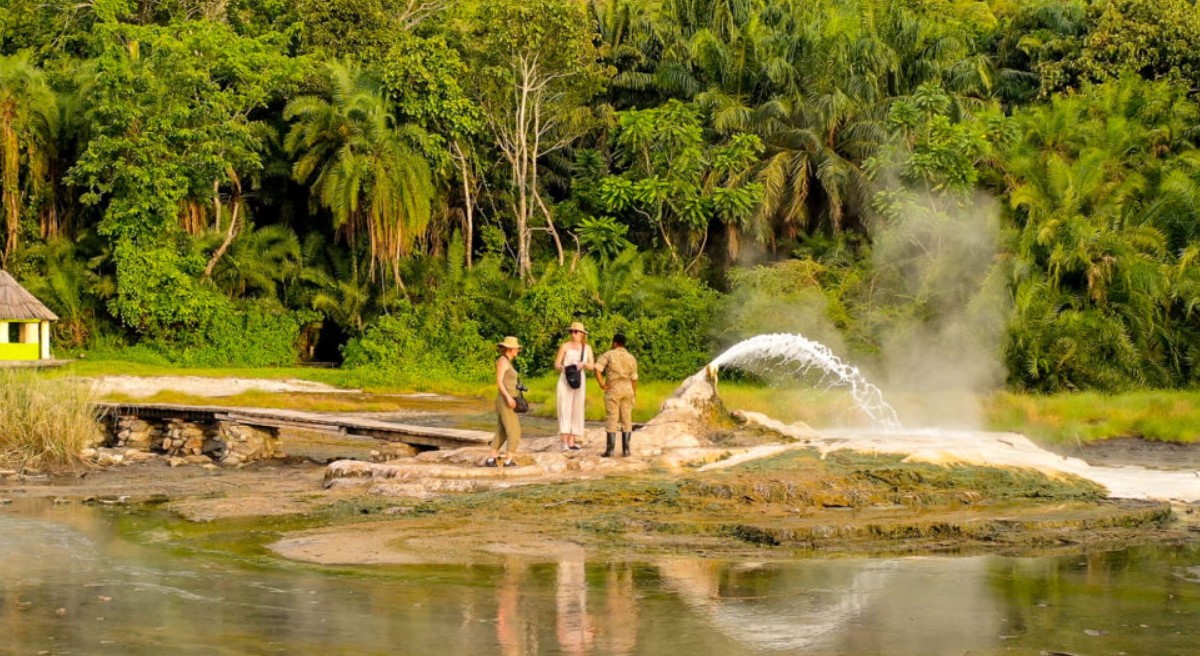
Visiting Semuliki National Park in the Rainy Season: One of the most popular parks in the area is Semuliki National Park, which is situated in the Bundibudgyo district of western Uganda. In 1932, the national park was gazetted as a forest reserve; in 1993, it was elevated to the status of national park. With its 435 bird species, 448 butterfly species, 53 animals, and 9 primates, Semuliki has drawn visitors from all over the world.
Travelers are welcome to visit Semuliki at any time of year because it is open for tourism. In Semuliki National Park, visitors are always welcome during the rainy season, which runs from March to May and October to November. Due to the unfavorable weather, which is marked by excessive rains and an abundance of sunshine, this season draws few travelers.
The biggest obstacle for visitors visiting Semuliki National Park during the wet season is the weather. The majority of park activities are impacted by heavy rainfall, particularly during the day. The dense undergrowth makes it difficult to see some of the park animals, and the nature pathways are consistently muddy and slick.
Activities to do in Semuliki National Park during the Rainy Season
Birdwatching
Semuliki National Park is home to more than 435 bird species, making it one of western Uganda’s top birding sites. For a variety of reasons, it is ideal to go bird watching in Semuliki National Park during the wet season. The abundance of food for birds in the park and the presence of numerous migratory birds are two reasons why birdwatching is beneficial during the wet season.
Shoebill stork, grey crowned crane, white thighed hornbill, piping hornbill, black-and-white casqued hornbill, black casqued hornbill, little stint, common sandpiper, three-banded plover, little egret, long-crested eagle, palmnut vulture, olive sunbird, white crested hornbill, red-tailed greenbul, joyful greenbul, violet backed starling, African pied hornbill, wood sandpiper, and spur-winged lawping are among the birds that birdwatchers can see during the rainy season.
African thrush, rufous flycatcher thrush, African harrier hawk, mountain buzzard, lizard buzzard, fire crested alethe, green white eye, black-winged stilt, brown snake eagle, chestnut capped flycatcher, wahlberg’s eagle, African sacred ibis, olive bellied sunbird, lesser stripped swallow, African palm swift, cattle egret, yellow-breasted forest robin, barn swallow, grey-backed fiscal, and pin-tailed whydah, among others.
Other activities to do in Semuliki national park during the rainy season
Nature walks
Even during the rainy season, visitors can engage in nature walk activities in Semuliki National Park. Although most park areas are still accessible to tourists, the walking pathways are often drowsy. The greatest approach to get close to nature while seeing the park’s various features is to take a nature walk in Semuliki.
Armed ranger guides will lead visitors on nature excursions in Semuliki National Park. In addition to meeting various park creatures, primates, birds, flora, and water sources, the guides lead visitors to various areas of the park. There are nature walks such Kirumia, Sempya, Mugiri River, and Red-tailed Monkey trails.
Cultural tours
Although there are many distinct ethnic groups in Semuliki National Park, the Batwa pygymies are the most cherished. They are well-known for having coexisted with animals in the jungle until the Uganda Wildlife Authority forced them to leave in order to make room for more animals. They were granted property close to the park where they now reside in the villages of Boma and Ntandi after being evicted.
In their spare time, visitors can visit the Batwa communities while on a safari in Semuliki National Park during the rainy season. You have the chance to learn a little bit about them and their occupation from their house. Visitors are escorted by a native guide to the batwa, where traditional dancers greet them. Elders are there to share stories from the past, and tourists are led to various homes to engage with the residents.
Visiting hot springs
Among the attractions that have made Semuliki National Park well-known are hot springs. Semuliki is one of the rare parks with hot springs. Even during the rainy season, tourists are welcome to visit these hot springs. An armed ranger guide leads a journey to the hot springs, and their job is to explain how these springs form. Additionally, he gives you other details regarding the national park.
Butterfly watching
Are you intending to visit Semuliki National Park during the rainy season because you adore butterflies? The exercise is feasible all year long, including during the rainy season. With 448 butterflies observed thus far, Semuliki National Park is the greatest place to observe butterflies.
Bicyclus, euphaedra alacris, euphaedra hollandi, aletis helcita, catuna crithea, cymothoe Cyclades, blue monarch, euphaedra rattrayi, bicyclus alboplagus, pikachu moth, mulberry hawkmoth, savanna pathfinder, African caper, cucumber moth, charaxes fulvescens, charaxes pollux, small black bush brown, and bicyclus mollitia can be seen by visitors to Semuliki National Park.
Rhipidarctia crameri, Bethune Baker’s bush brown, marcipalina umbrosa, chirinda bush brown, amata marina, gregori’s brown pansy, euphaedra hybrida, hill bush brown, fulvous hawk, blue diadem butterfly, square-winged red charaxes, euphaedra hybrida, hill bush brown, boisduval’s tree nymph, common ginger white, dark yellow forest sylph.