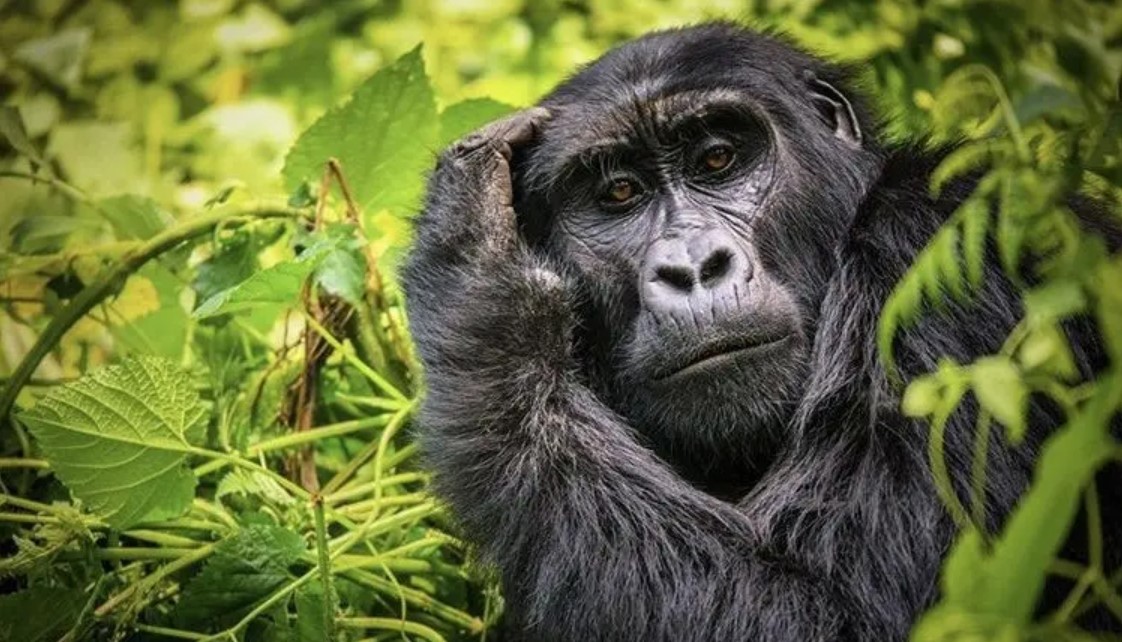
What to expect on a gorilla safari to Bwindi: Mountain gorillas are the closest relatives to human beings with over 98% of DNA they share with human beings. In the whole world mountain gorillas are found in only four national parks situated Africa and that is where tourists can get to see them in their natural habitats. Uganda, Rwanda, and DR Congo are the only countries hosting endangered mountain gorillas in four national parks.
Bwindi Impenetrable Forest National Park is found in the southwestern part of Uganda in Kisoro district. It’s the best national park to see mountain gorillas from because of the high gorilla population in the whole world. Trekking is very affordable and safe compared to Rwanda and Congo. Lastly, Bwindi gives tourists a chance to participate in a gorilla habituation where they engage in activities that make the apes get used to the human presence around them.
Things to expect on a gorilla safari to Bwindi
Seeing mountain gorillas
On a gorilla safari to Bwindi Impenetrable Forest National Park, you have a 99% chance of seeing endangered mountain gorillas in the wild. By doing gorilla trekking or gorilla habituation you will be able to encounter mountain gorillas in the jungle carrying out day to day activities like nesting, breastfeeding, hunting, mating, and playing to mention but a few.
Tourists who want to see mountain gorillas in Bwindi must purchase gorilla trekking or habituation permits which are documents that allow them to be part of the activities that allow one to go see mountain gorillas in the wild. A gorilla trekking permit allows one to be around the apes for one hour and a gorilla habituation permit allows one to be around the mountain gorillas for four hours.
Locating mountain gorillas needs patience.
Gorilla trekking and gorilla habituation in Bwindi impenetrable forest national park require some patience because seeing these apes takes some time. The search which is done using different trekking trails may take 2 to 5 hours because these gorillas are mobile. The nature of trekking rails and the speed of the trekkers also determine the time taken to locate the mountain gorillas.
Seeing different wildlife species
Bwindi Impenetrable Forest National Park is home to over 120 mammals, and 350 bird species. While on a safari to Bwindi Impenetrable Forest National Park, taking part in nature walks and trekking activities will enable tourists to see some of the wildlife species of the park. As tourists move to different parts of the forest, they are able to meet these wildlife species having a good time there.
Among the wildlife to see in Bwindi Impenetrable Forest National Park include giant forest hogs, forest elephants, side-stripped jackals, l’hoest’s monkeys, red-tailed monkeys, black and white colobus monkeys, blue monkeys, chimpanzees, and olive baboons among others. Birders will also be able to see some of the species like Grauer’s broadbill, shelley’s crimsonwing, archer robin chat, ladgen’s bush shrike, grauer’s swamp warbler, regal sunbird, nuemann’s warbler, and willard’s sooty boubou among others.
Different accommodation types
Bwindi Impenetrable Forest National Park has four sectors where gorilla trekking is carried out from. Where to stay depends on the sector where you are to trek gorillas from the next day and also the travel budget. Bwindi has a budget, mid-range, and luxury accommodation facilities in all the trekking sectors.
While on a safari to Bwindi Impenetrable Forest National Park you may choose to stay at lodges such as Bwindi Lodge, Nkuringo Bwindi Lodge, Mahogany Springs Lodge, Gorilla Leisure Lodge, Four Gorillas Lodge, Bakiga Lodge, Ride 4 a Woman, Clouds Mountain Gorilla Lodge, Lake Mulehe Safari Lodge, Broadbill Forest Camp, and Bweza Lodge to mention but a few.
When to have a gorilla safari in Bwindi Impenetrable Forest National Park
Tourists can have a gorilla safari in Bwindi Impenetrable Forest National Park at any time of the year for the park is always open. The best time however is the dry season which happens from June to September and December to February. This is a period when the region is receiving little rainfall and plenty of sunshine.
During the dry season, the trekking trails are dry and easier to pass through which eases movement and location of the mountain gorillas. The vegetation within the forest is short and scattered giving clear views of gorillas and other attractions. The roads leading to the park are in good condition which allows tourists access different areas on time.
Tourists can still have a gorilla safari in Bwindi during the rainy season which happens from March to May and October to November. This is a period when the park is receiving a lot of rainfall and little sunshine. Tourists should know that the trekking trails are muddy and slippery which affects the speed of trekkers.