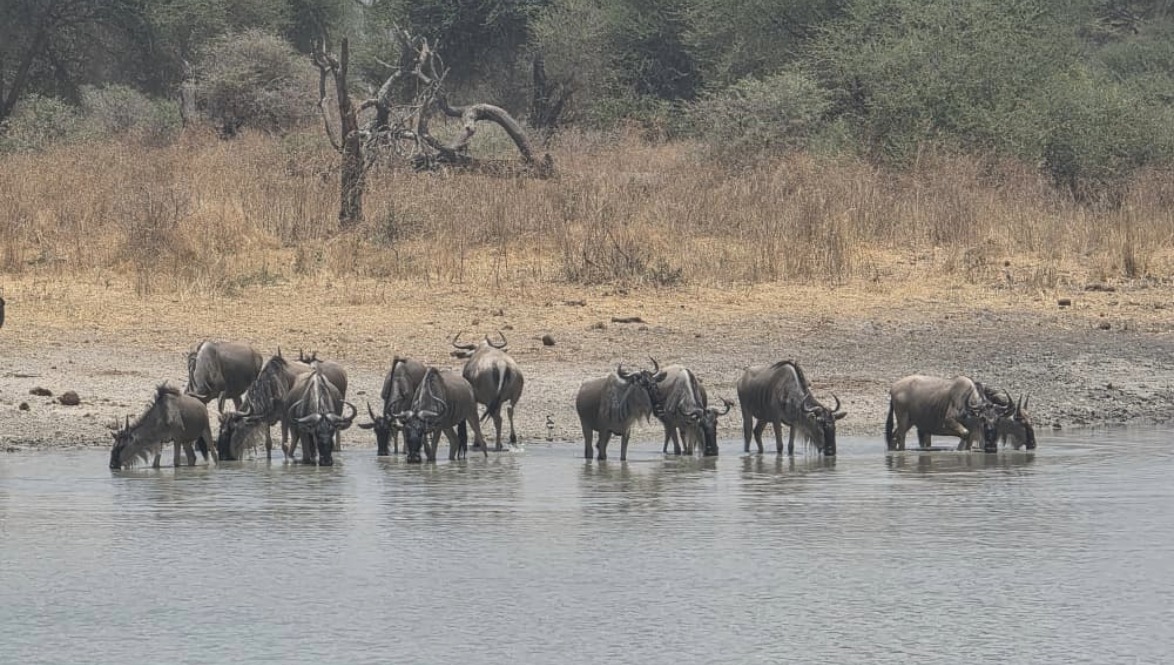
The Great Migration in Tanzania is one of Africa’s most remarkable wildlife experiences. Each year, vast herds of wildebeest, accompanied by zebras and gazelles, move across the Serengeti ecosystem in search of fresh grazing and water.
But when is the best time to see the Great Migration in Tanzania, and where should you go? The answer depends on whether you want to witness the wildebeest calving season in Ndutu, follow the herds through the Western Serengeti, or experience the dramatic Mara River crossings in the north.
In this guide, Alive Africa Adventures explores the migration calendar, the best viewing locations and practical tips to help you plan an unforgettable Tanzania safari.
What Is the Great Migration? – Great Migration Tanzania
The Great Migration is the continuous, year-round movement of herds between the southern plains of the Serengeti in Tanzania and the Maasai Mara in Kenya. It is not a single event with a start and finish line. It is a never-ending cycle driven by rainfall and grass growth.
- Who takes part: Roughly 1.5 million wildebeest, plus large numbers of zebras and Thomson’s gazelles, as well as eland and other antelope.
- Why they move: The herds follow the rains and the fresh, nutritious grass that grows after them.
- What follows them: Lions, cheetahs, leopards, spotted hyenas and Nile crocodiles all depend on the herds for food.
- Where it happens: Most of the migration takes place inside Tanzania, and the herds spend only part of the year in Kenya’s Maasai Mara.
Because the Serengeti hosts the herds for most of the year, Tanzania is the best country for anyone who wants flexibility in when they travel.
Quick Answer: When Is the Best Time to See the Great Migration in Tanzania?
There is no single best month, because the migration offers a different spectacle in every season. Here is a simple summary.
- January to March: Calving season in the southern Serengeti and Ndutu. Newborn wildebeest and active predators.
- April to May: Long grass plains and herds moving north through the central Serengeti. Fewer visitors and lower rates.
- June to July: Herds gather in the Western Corridor and face the Grumeti River crossings. Rutting season begins.
- July to October: Northern Serengeti and the Mara River. The dramatic river crossings.
- November to December: Herds move back south toward the short-grass plains.
If your dream is to see wildebeest plunging into crocodile-filled water, aim for late July to September. If you prefer newborn animals, predator action and fewer vehicles, aim for February.
The Great Migration Month by Month – Great Migration Tanzania
The following calendar is a guide. Because the herds follow rainfall, the exact timing can change by a few weeks from one year to the next.
January: Herds on the Southern Plains
After the short rains, the southern Serengeti and the Ndutu area are green and rich in grass. Huge herds spread across the open plains, and the first calves begin to arrive toward the end of the month.
February: Peak Calving Season
February is the heart of the calving season. Hundreds of thousands of calves are born in a short period, often within a few weeks. Calves can stand and run within minutes of birth, but many are caught by lions, hyenas and cheetahs. It is a time of life, death and constant action.
March: Herds Begin to Spread
The calving season winds down, and the herds begin to spread out as the plains dry. The long rains approach, so the weather becomes less predictable.
April: Moving North Through the Central Serengeti
Herds start moving north and west through the Seronera area during the long rains. The landscape is lush, skies are dramatic and visitor numbers are low. Some camps close for a few weeks, so check availability.
May: Rutting Begins
The herds continue moving across the central and western Serengeti. Toward the end of May, the mating season, known as the rut, begins. Males make loud grunting calls, and the herds are noisy and active.
June: Western Corridor and the Grumeti River
As the rains ease, large numbers of wildebeest gather in the Western Corridor. They must cross the Grumeti River, which is home to large crocodiles. Crossings here are less predictable than at the Mara River but are still impressive.
July: Heading North Toward the Mara River
Herds move across the Western Corridor and then head north through the Serengeti. By the end of July, the first groups begin to reach the northern Serengeti and the Mara River.
August: Mara River Crossings
August is one of the best months for the dramatic river crossings. Thousands of animals gather on the banks, wait for the right moment and then rush into the water, with crocodiles and steep riverbanks adding to the danger.
September: Peak River Crossing Season
Crossings continue through September, and the northern Serengeti remains one of the best places to be. Herds cross back and forth between the Tanzanian and Kenyan sides of the Mara ecosystem.
October: Herds Begin Heading South
Many herds are still in the north early in the month, and crossings can continue. By the end of October, the short rains begin to arrive and the herds start drifting south.
November: The Journey South
Herds move through the eastern and central Serengeti, heading back toward the southern plains. It is a quieter time with fewer vehicles and good value.
December: Back Toward the Southern Plains
The herds settle on the short-grass plains again as the short rains turn the land green. The cycle is ready to begin again.
Where to See the Great Migration in Tanzania
The Serengeti is a huge park, and where you stay matters as much as when you travel. Here are the main areas to consider.
Southern Serengeti and Ndutu (December to March)
This is the place for calving season. The open plains make it easy to see herds, and predators are active day and night. Ndutu lies partly within the Ngorongoro Conservation Area, and the landscape combines grassland, acacia woodland and soda lakes.
Central Serengeti and Seronera (All Year, Best April to June)
The Seronera area has resident lions, leopards and cheetahs, so it offers reliable game viewing throughout the year. The migration passes through this region as the herds move north in the early part of the dry season.
Western Corridor and Grumeti (May to July)
The Western Corridor follows the Grumeti River and offers a chance to see early river crossings, large crocodiles and thick riverine forest filled with birds and colobus monkeys.
Northern Serengeti and the Mara River (July to October)
This remote region, around areas such as Kogatende and Lamai, is the stage for the world-famous Mara River crossings. It is quieter than the central Serengeti, but its camps are often some of the most sought-after and booked well in advance.
Eastern Serengeti and Loliondo (November to December)
As the herds return south, they often move through the eastern and northeastern parts of the Serengeti. This is a good choice for travelers who want to avoid crowds.
How to Choose Between Calving Season and River Crossings
Many travelers find it hard to decide between the two most famous parts of the migration. This simple comparison can help.
- Choose calving season (January to March) if: you want newborn animals, a high chance of seeing predator kills, easier game viewing on open plains and fewer crowds.
- Choose river crossings (July to October) if: you want the classic dramatic scene of wildebeest and zebras crossing the Mara River, and you are happy to wait patiently at the riverbank for the right moment.
River crossings need patience. Herds may gather and hesitate for hours, or even days, before a crossing begins. Calving season delivers more constant action, which many people find easier to enjoy.
Tips for Planning Your Great Migration Safari
- Follow the herds, not the calendar. Ask your safari planner where the herds are in the weeks before you travel and choose camps accordingly.
- Stay at least three nights in one area. This gives you more time to find the herds and to wait for river crossings.
- Consider mobile camps. Some seasonal camps move to follow the migration and put you close to the action.
- Book early. Camps near the Mara River and in Ndutu are in high demand, especially from July to September and in February.
- Hire an experienced guide. Local guides understand animal behavior, read the signs of a pending crossing and know where to position the vehicle.
- Be patient and respectful. Keep quiet near the river, follow park rules and never pressure your driver to get too close to the animals.
- Pack for changing weather. Early mornings can be cool, middays hot and dusty, and showers possible in the wetter months.
- Think about a balloon safari. A sunrise hot-air balloon flight over the Serengeti offers a unique view of the plains and herds.
Can You See the Great Migration in Both Tanzania and Kenya?
Yes. The herds move between the Serengeti and the Maasai Mara, usually spending the late part of the dry season in Kenya. However, the Tanzanian side hosts the herds for more of the year, including the calving season, which takes place only in Tanzania. For many travelers, Tanzania offers more variety, more space and more flexible travel dates.
Frequently Asked Questions – Great Migration Tanzania
When is the best time to see the Great Migration in Tanzania?
It depends on what you want to see. February is best for calving season, and July to September is best for Mara River crossings.
Where is the Great Migration in Tanzania right now?
The herds are always on the move, so their location changes with the rains. Your safari operator can give you up-to-date information in the weeks before your trip.
Can I see the river crossings in June?
In June, the herds are usually in the Western Corridor and may cross the Grumeti River. The more famous Mara River crossings generally begin in July.
How many days do I need for a Great Migration safari?
We recommend at least four to five days in the Serengeti, ideally split across two areas or at least three nights in one place. Longer stays increase your chances of seeing the key moments.
Is the Great Migration a guaranteed sighting?
No. Wildlife is wild, and the herds follow the weather. Choosing the right region for your dates and staying long enough gives you the best chance.
What is the cheapest time to see the Great Migration?
April, May and November usually have lower rates, although the herds may be more spread out and you will not see river crossings.
Is it better to see the migration in Tanzania or Kenya?
Tanzania offers longer access to the herds, including calving season, while Kenya’s Maasai Mara is a good choice for river crossings from about August to October. Many travelers prefer the Serengeti for its size and flexibility.
Final Thoughts – Great Migration Tanzania
The Great Migration in Tanzania is not a one-day event but a year-round journey with a different highlight in every season. Come from January to March for newborn calves and predator action, June to July for early river crossings in the west, and July to October for the iconic Mara River crossings in the north.